
- Media
- Regulation
Can Germany’s gambling regulation catch up with reality?
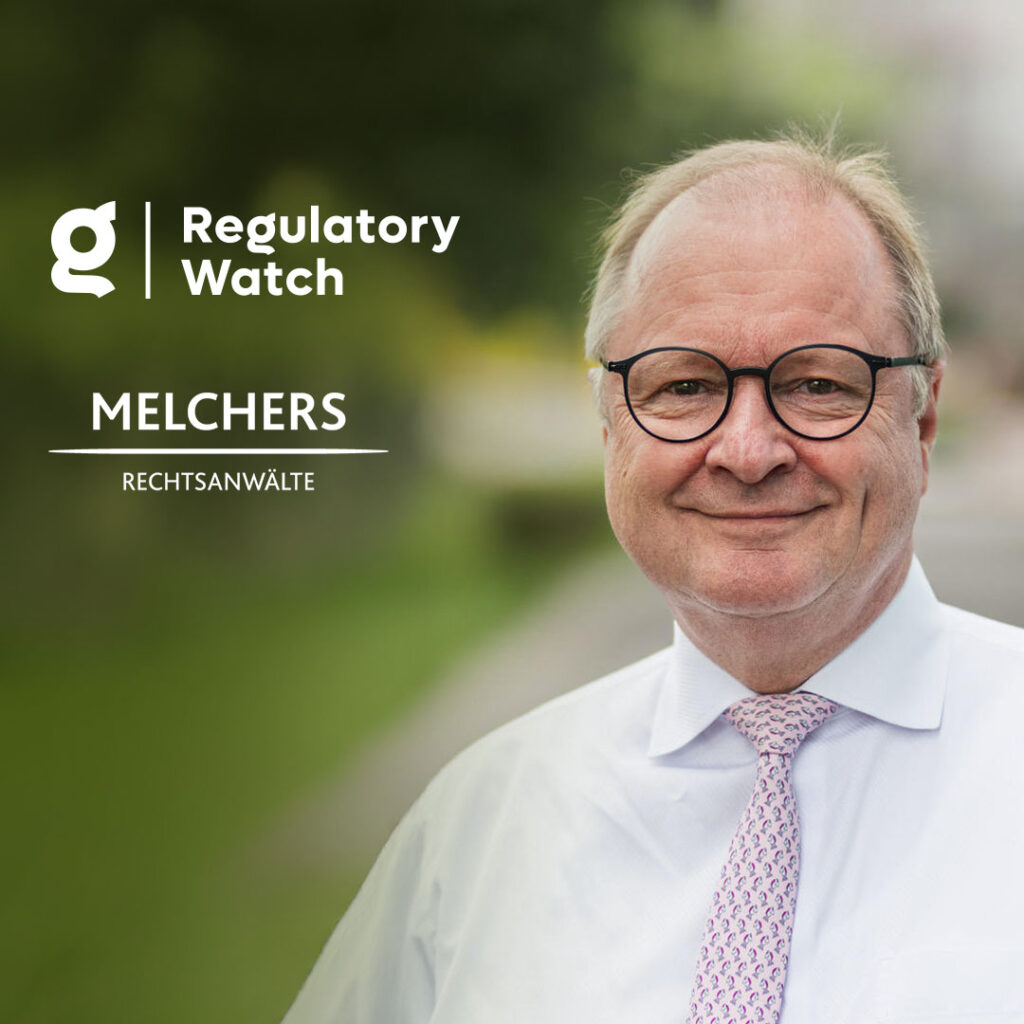

Nearly four years after the Interstate Treaty on Gambling came into force, the country is still struggling to strike the promised balance between consumer protection and a functioning legal market. “The hallmark of successful regulation is the channelisation rate,” says Dr Joerg Hofmann, Head of the Gaming & Betting Law Practice Group at Melchers Law Firm. “If the black market share is high, one cannot speak of sufficient balance and this is precisely the case in Germany.”
Fragmented governance hinders Germany’s fight against the black market
Since assuming full regulatory control, Germany’s Joint Gambling Authority (GGL) has matured into a more capable and confident body but structural constraints continue to undermine its effectiveness. “The GGL has, in contrast to its initial phase around three years ago, noticeably gained experience and expertise,” observes Dr Joerg Hofmann. “However, it suffers from a structural flaw.” The regulator operates under state rather than federal law, meaning that the 16 Länder retain substantial influence through the administrative board that oversees key decisions.
This diffusion of authority slows decision-making and injects political calculation into what should be technical regulatory judgments. While enforcement actions particularly payment blocking have begun to show modest results, Hofmann points out that Germany’s fragmented governance continues to impede a coherent national strategy aga

inst the black market. A long-awaited amendment introducing IP blocking powers could come into force by mid-2026, but he warns that “these measures alone are probably not enough,” given how easily unlicensed operators can evade restrictions online.
Restrictions with advertising
Advertising, another central pillar of market regulation, remains fraught with contradictions. Legal operators argue that tighter restrictions have inadvertently weakened consumer protection by driving players toward unlicensed platforms. Hofmann agrees that “advertising by legal operators is recognised as essential for channelisation,” yet current rules such as bans on marketing during live sports or by active athletes limit visibility and blunt the competitive edge of licensed firms. He calls for a more pragmatic approach: rather than prohibiting influencer partnerships outright, regulators should “permit regulation-compliant use of influencers” to engage audiences responsibly.
Likewise, allowing comparison sites to list both licensed and unlicensed casinos, clearly distinguishing between them, would, he argues, better inform consumers and strengthen the legal market’s appeal.
Online slots and poker
Germany’s taxation model for online slots and poker remains one of the most contentious aspects of its gambling framework and, according to Dr Joerg Hofmann, one of the most damaging. The current levy of roughly 5.03% on stakes, he argues, “is one of the main causes for missing the channelisation targets.” With legal operators unable to match the payout ratios of offshore competitors, the regulated sector has lost significant ground. “Whilst unlicensed operators can offer RTPs of over 95%, licensed German operators are limited to around 88.5%,” Hofmann notes.
The result has been a sharp contraction in the onshore market by 63%, and a collapse in channelisation to just 22%. Hofmann believes tax reform is essential and increasingly likely: “It remains to be hoped that there will soon be an initiative by the federal states in the Bundesrat that provides for a market-appropriate gambling levy based on gross gaming revenue,” he says, suggesting that growing political unease could drive change within the next few years.
Despite the regulatory strain, relations between the industry and the authorities are beginning to thaw. “Yes, more and more,” Hofmann says when asked whether regulators are open to dialogue.
Under Germany’s federal structure, only the Prime Ministers of the 16 states can agree amendments to the Interstate Treaty on Gambling. Regulators, for their part, “must apply the existing law,” though Hofmann believes they can and should use their “expertise and market knowledge to put forward proposals” for improvement.
Still, concerns persist that Germany’s model risks clashing with EU principles on free movement and fair competition, a warning underscored by Hofmann’s view that certain provisions, such as the €5 million security deposit requirement and the structure of Section 22c governing online casino games, could face legal scrutiny in Brussels and beyond.
Esports goes from strength to strength
Esports is fast emerging as Germany’s next frontier in gambling regulation. Once dismissed as a niche pastime, competitive gaming has evolved into a billion-euro global industry with a rapidly expanding betting market. Yet in Germany, the legal status of esports remains ambiguous. “Esports is a growing sector, and betting on esports is becoming more and more popular,” says Dr Joerg Hofmann. “But there’s still uncertainty about whether esports should be treated the same as traditional sports under German law.”
Momentum, however, is building. Policymakers are beginning to consider tailored legislation that would grant esports equal footing with conventional sports, a shift reinforced by the German government’s move to recognise esports as a charitable activity and the IOC’s decision to launch the first Olympic Esports Games in 2027.
“In the long term, all these effects could lead to esports being treated on an equal level with traditional sports,” Hofmann adds, “which would form the basis for betting on esports.”
What’s ahead for the German gaming market
Looking ahead, Hofmann believes Germany could learn much from the collaborative models seen in jurisdictions such as the UK and Malta. “Protecting and promoting one’s own industry, rather than putting obstacles in their way, is the only right path for a strong legal market,” he says.
Both regulators, he notes, have built trust through open dialogue and cross-border exchange, something he believes Germany’s GGL must embrace if it is to mature into a credible, internationally engaged authority.
As for the future of the domestic market, Hofmann is clear “The German market needs attractive products. Everything that drives players to the black market must also be possible for licensed operators, in a good balance between over- and under-regulation.”
With reform discussions under way and pressure mounting from both industry and the EU, Germany’s gambling framework now stands at a crossroads, between cautious control and the competitiveness it urgently needs to reclaim.
Lea Hogg interviewed Dr Dr Joerg Hofmann, a Heidelberg-based lawyer who was recently named Who’s Who Legal’s “Gaming Lawyer of the Year”. He remains one of the industry’s most influential voices on regulation.
Stay ahead in the game! Follow Game Lounge on YouTube for the latest insights from the gaming industry. Subscribe now.

