- Media
iGaming CEOs discuss gaming market strategies for success
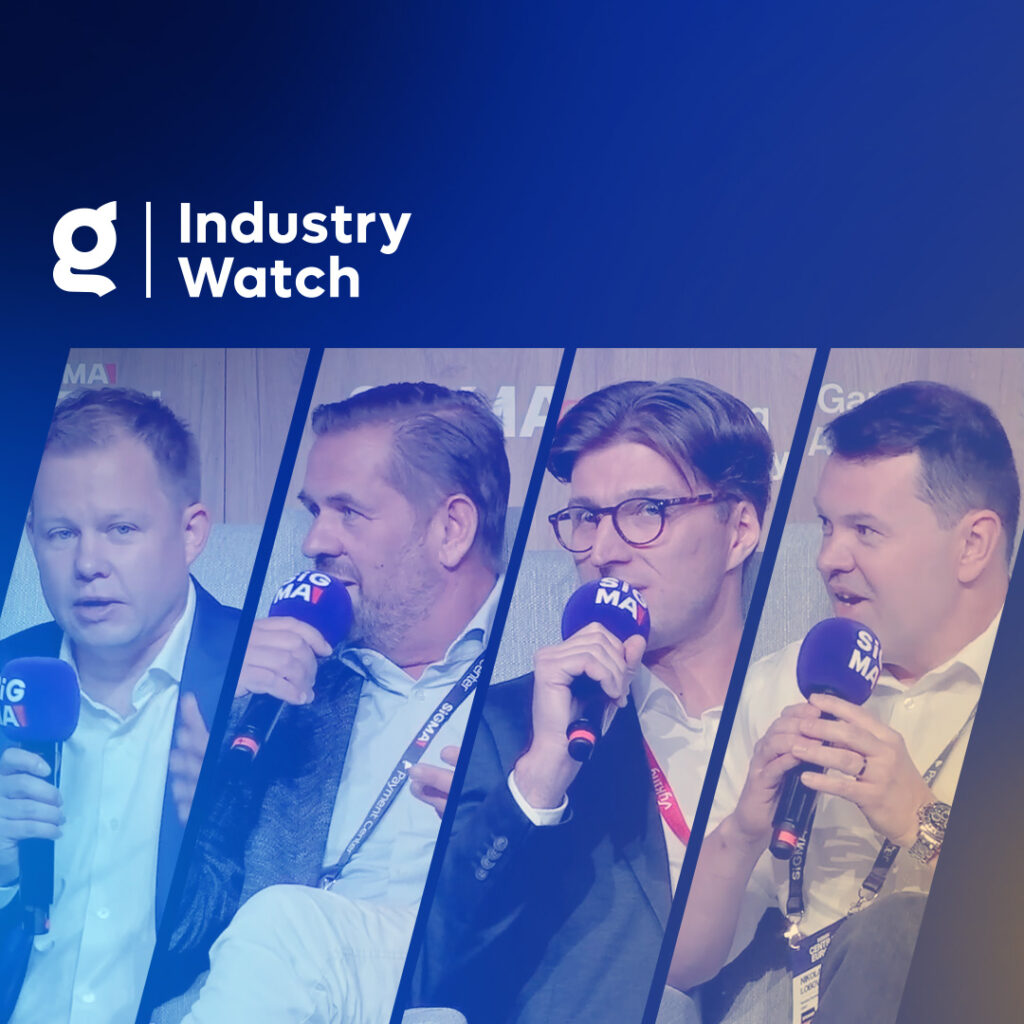

iGaming CEOs participated in the CEO Power Panel during SiGMA Central Europe, during which they discussed what strategies they use to succeed in the changing gaming industry, as well as what challenges they have encountered and what lessons they took away from their experiences.
Game Lounge CEO Richard Dennys was among the participants of the panel, along with Quantum Gaming CEO Oliver De Bono, Swiss Casinos CEO Marcel Tobler, Nobles Gaming CEO Nikolay Lobov, and Vyking CEO Franz Gerhart.
Dangers of overstretching
De Bono, who was moderating the panel, spoke of how the industry has seen businesses come in and overstretch their position, ultimately losing market share. He asked the panel about the pitfalls that can be avoided in this regard, as well as what can be learned from looking at veterans of the industry.
Game Lounge CEO Dennys replied by commenting that he is not an industry veteran in gaming specifically, but talked about his extensive experience in e-commerce and retail. He said that one of the things that happens quite a lot is that there could be a very successful business that believes in its own PR, and opts to buy a few companies. He continued that the business may do very well and expand into different markets, but that the complete focus and ethos of the company may end up changing unintentionally.
He said that this happens because it is very difficult to control a much larger business, and that founders often start with two or three people in the business, but all of a sudden have potentially thousands of people to look after.
De Bono then asked Tobler for his thoughts as to why companies change. “Why do we go from those getting their hands dirty, to corporate entities where everyone’s responsibilities are kept within a very strict box?” De Bono questioned.
Tobler replied that he believes the truth is that this is a must. “At a certain stage of a company’s lifetime and at a certain size of your company, not everybody can do everything anymore. You need to hire specialists that focus on one part, and then there is one thing in my view, which is for a strategy, the most difficult thing to find in a company is alignment.”
He continued that alignment between different businesses within a group and within different teams is really hard, and that one runs the risk of different teams going in different directions due to the difficulty of effectively aligning a large business of 600 people versus an office of 10 people.
Preparing for change
De Bono said that he believes that there is a massive consolidation of brands coming, as he referred to sweepstakes, crypto casinos, and changes in regulation. “It’s a guaranteed pullback on the market. We know this, we’re seeing it from the regulators.” He added that this costs both jobs and money, and questioned what entrepreneurs and CEOs can do to prepare for the coming changes.
Lobov responded that in order to prepare well for such changes, one should be part of those changes. “You can’t really react, but you need to be in the flow of those changes and act as an integral part of it,” he stated.
He continued that regulation is always changeable and not always ideal, and that in some parts of the business it is believed that the regulator is just something which prevents companies from doing their business and unleashing their full creativity, “but it’s not exactly how it works, because if we go in the same direction with regulation and completely follow what we need to do, how we go to the particular market, what are the ways about going into those markets, so we can be fully aligned with it”.
Gerhart commented that the more that brands are autonomous, the more successful they can individually become. “Eventually there’s a lifetime to each and every brand, and you should not overstay the welcome, and I think we should facilitate that process. Let new brands come, let them be successful, empower their teams.”
Stay ahead in leadership with the latest insights from industry experts. Subscribe today.