
- Media
“Broader direction is worrying” MEP says on EU court ruling
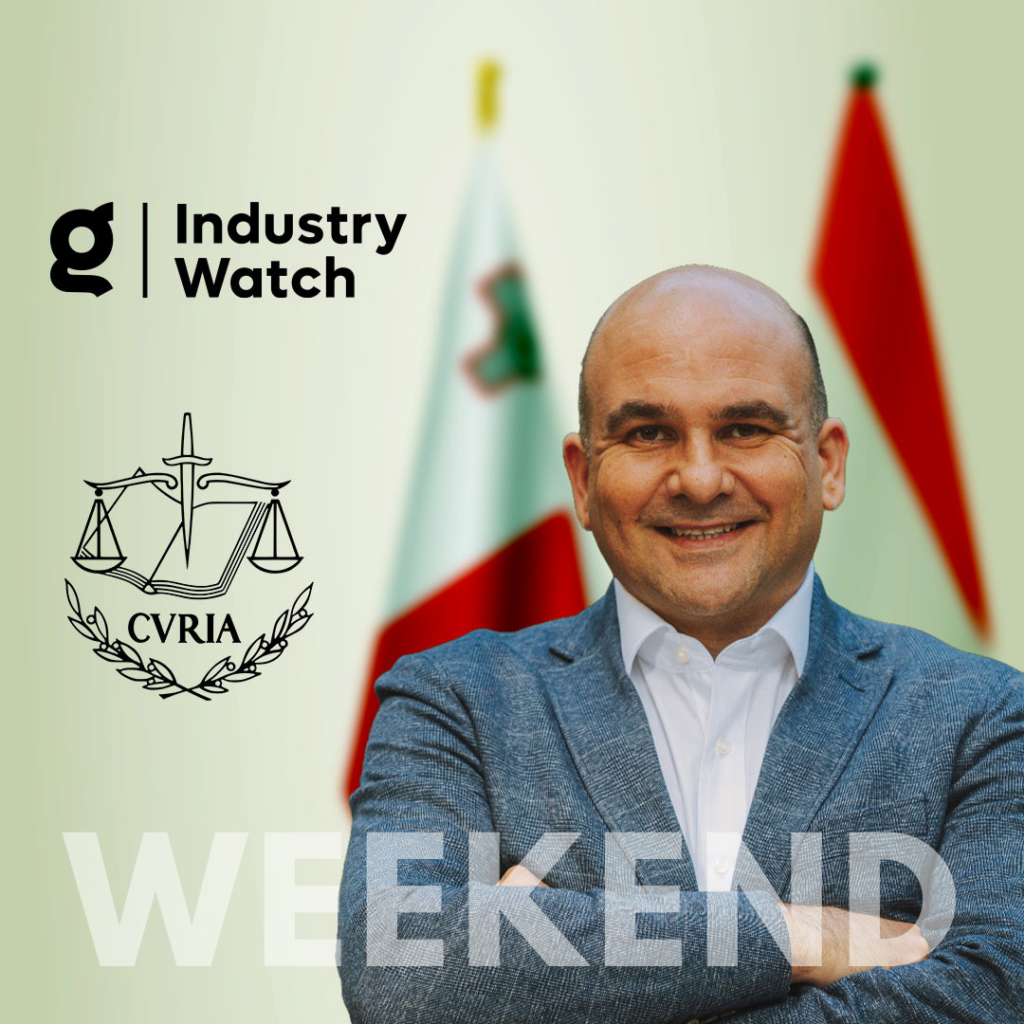

A ruling by the Court of Justice of the European Union (CJEU) may alter how cross-border online gambling disputes are pursued within the bloc, after judges found that losses sustained by a player are deemed to occur in the country where that player resides, rather than where the gambling operator is licensed.
The judgment, delivered in Case C-77/24, arises from proceedings brought by an Austrian resident against the directors of Titanium Brace Marketing, a Malta-licensed online gambling provider that did not hold a licence in Austria. The claimant sought to recover losses incurred while gambling online from Austria, arguing that the absence of a local licence rendered the activity unlawful under Austrian law.
While the ruling does not invalidate national legislation or licensing regimes, it signals a shift in how jurisdiction and applicable law may be determined in cross-border gambling disputes, with potential consequences for operators, regulators and players across the EU.
EU gambling market risks further fragmentation
MEP Peter Agius, speaking with Game Lounge Media, urged caution in interpreting the immediate impact of the ruling. “In my view, the Court of Justice’s judgment concerns a general point of EU law. Its real-world impact will depend on how it is applied by national courts in individual cases,” he said.
He added that Malta’s Bill 55 “is still in force and, at this stage, remains legally valid”, while noting that infringement procedures launched by the European Commission remain “at an early stage and are not yet conclusive”.
Agius warned, however, that the broader implications for the EU’s internal market are worrying.. “We are seeing fewer routes towards a properly functioning internal market for gaming, with continued reliance on divergent national rules that risks deeper fragmentation. This should be taken more seriously, particularly from the perspective of free movement and the consistent operation of the single market.”
Applicable law in cross-border online gambling disputes
The CJEU’s Communications Directorate stated that, in relation to online games of chance, “a player may, as a general rule, rely on the law of his or her country of residence when bringing an action to establish liability in tort or delict on the part of the directors of a foreign provider that does not hold the required licence”.
The Austrian Supreme Court referred the matter to Luxembourg to clarify which national law should apply under the EU’s Rome II Regulation, which governs non-contractual obligations. The CJEU observed that the applicable law is, as a general rule, that of the country in which the damage occurs, regardless of where the event giving rise to the damage took place.
According to the court, the alleged damage in online gambling cases materialises where the player participates in the activity. In this instance, the losses were sustained in Austria, meaning Austrian law could apply to the claim, rather than Maltese law. The court also clarified that such actions fall outside the Rome II exclusion for matters arising from company law.
The judgment has renewed scrutiny of Malta’s legislative approach to protecting its gaming sector, particularly a law known as “Bill 55”, which restricts the enforcement of certain foreign judgments against Malta-licensed gaming companies. The legislation has been contentious and is the subject of ongoing attention at EU level.
The CJEU noted that national courts retain some discretion. Under Rome II, judges may depart from the general rule where a case is “manifestly more closely connected” with another country, allowing a different national law to be applied depending on the circumstances.
Background: Agius’ views of Bill 55
Peter Agius frames Bill 55 not as an isolated Maltese manoeuvre, but as a reaction to a regulatory vacuum created in Brussels.
The European Commission, he argues, has a clear treaty duty to safeguard free movement of services, yet in online gaming it has effectively “walked off the pitch”, closing infringement proceedings in 2017 and leaving member states to erect fragmented, often restrictive regimes unchecked.
While EU law allows limits on free movement on moral or public order grounds, Agius stresses that these must be proportionate and non-discriminatory, a threshold increasingly ignored amid monopoly systems and aggressive litigation in countries such as Austria and Germany. His comments are intended to force the Commission back to the table, restore political accountability, and reassert the rule of law in a sector that has become a test case for whether the EU’s internal market still functions as promised.
Stay ahead in leadership with the latest insights from industry experts. Subscribe today.
